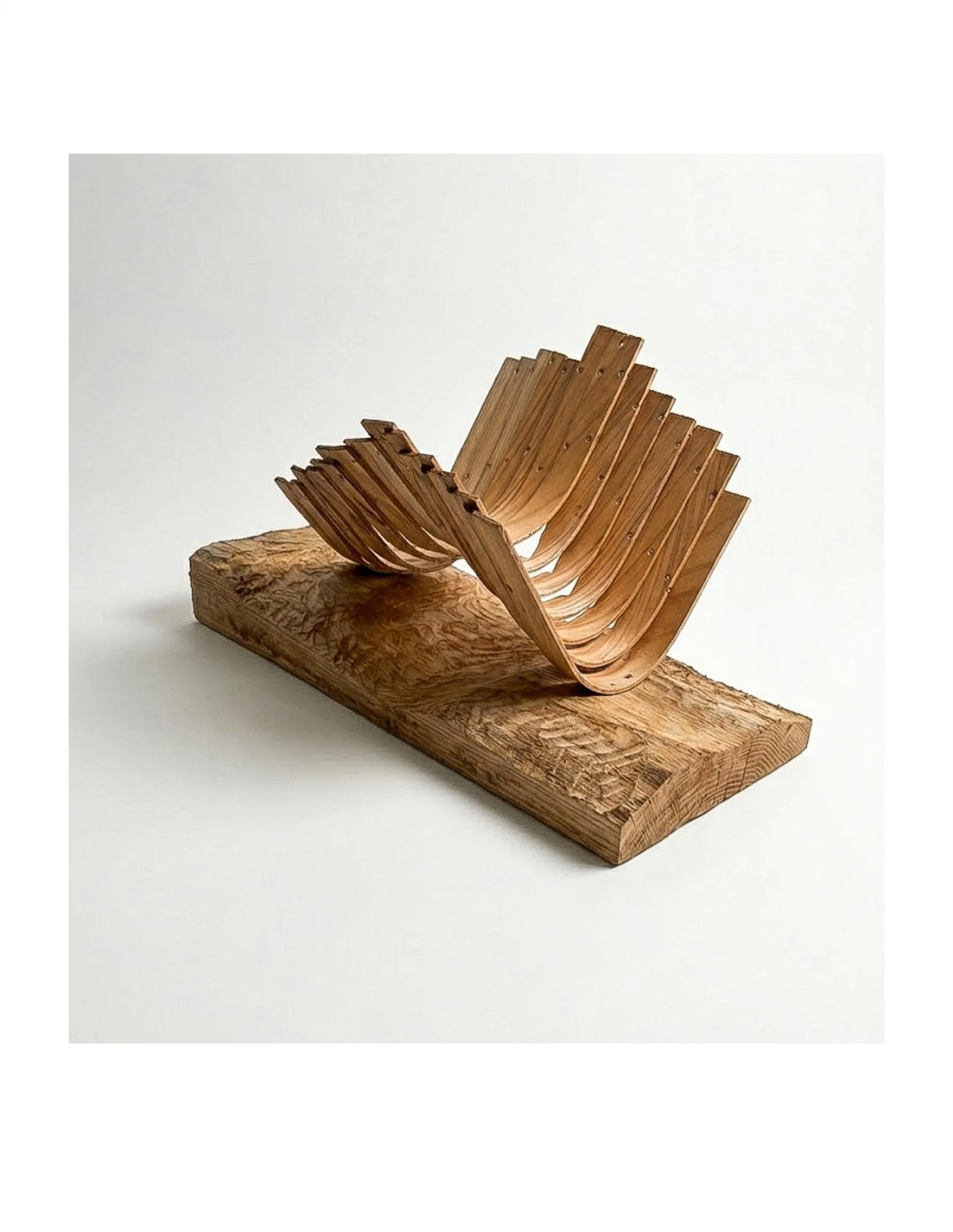
Timber model testing a steam bent component system for a bridge with @pearce_plus
.
.
#model #architecturalmodel
May scenes and a collection of stories. A bit of fog, lots of sun and incredible wild flowers and fireflies.
Out / In
On Materiality
Tim Ingold: “To understand materiality, it seems, we need to get as far away from materials as possible. For me, the problem came to a head when, in November 2002, I attended a session at the annual meetings of the American Anthropological Association which were held in that year in the city of New Orleans. The session was entitled ‘Materiality’, and included presentations on such topics as ‘Immateriality’, ‘For a materialist semiotics’, ‘Materiality and cognition’, and ‘Praxeology in a material world’. These presentations were overflowing with references to the works of currently fashionable social and cultural theorists, and expounded in a language of grotesque impenetrability on the relations between materiality and a host of other, similarly unfathomable qualities, including agency, intentionality, functionality, sociality, spatiality, semiosis, spirituality and embodiment. Not one of the presenters, however, was able to say what materiality actually means, nor did any of them even mention materials or their properties. For the most part, I have to confess, I could make neither head nor tail of what they were talking about. As anthropologists, I thought to myself, might we not learn more about the material composition of the inhabited world by engaging quite directly with the stuff we want to understand? What academic perversion leads us to speak not of materials and their properties but of the materiality of objects? It seemed to me that the concept of materiality, whatever it might mean, has become a real obstacle to sensible enquiry into materials, their transformations and affordances.”
Me: I try and forbid my students using the word ‘materiality’ . It doesn’t, for me, suggest any observation around that has any substance: more, it implies an entirely superficial reading of material - as a paper thin aesthetic immaterial veneer plastered onto a substrate of nothingness.
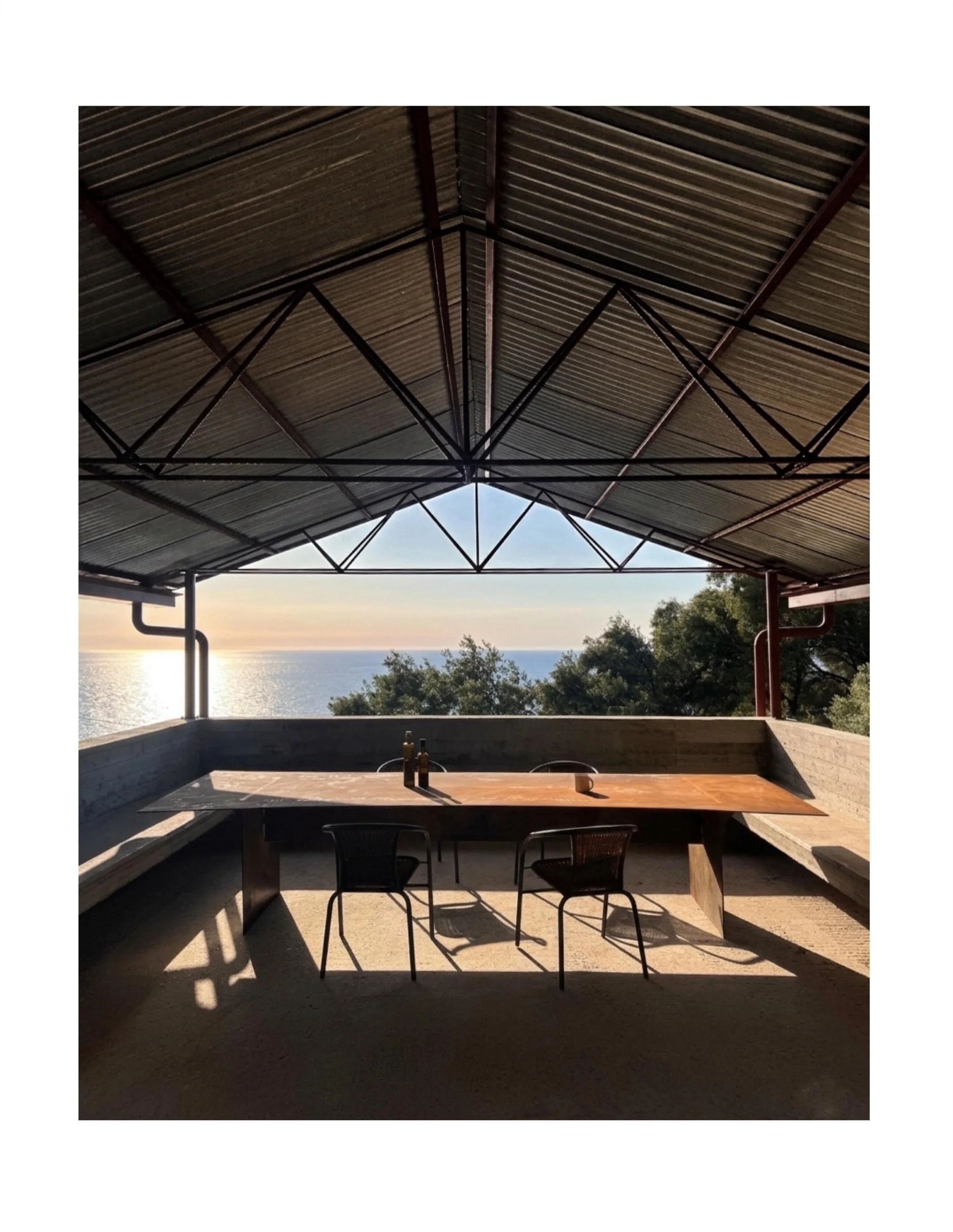
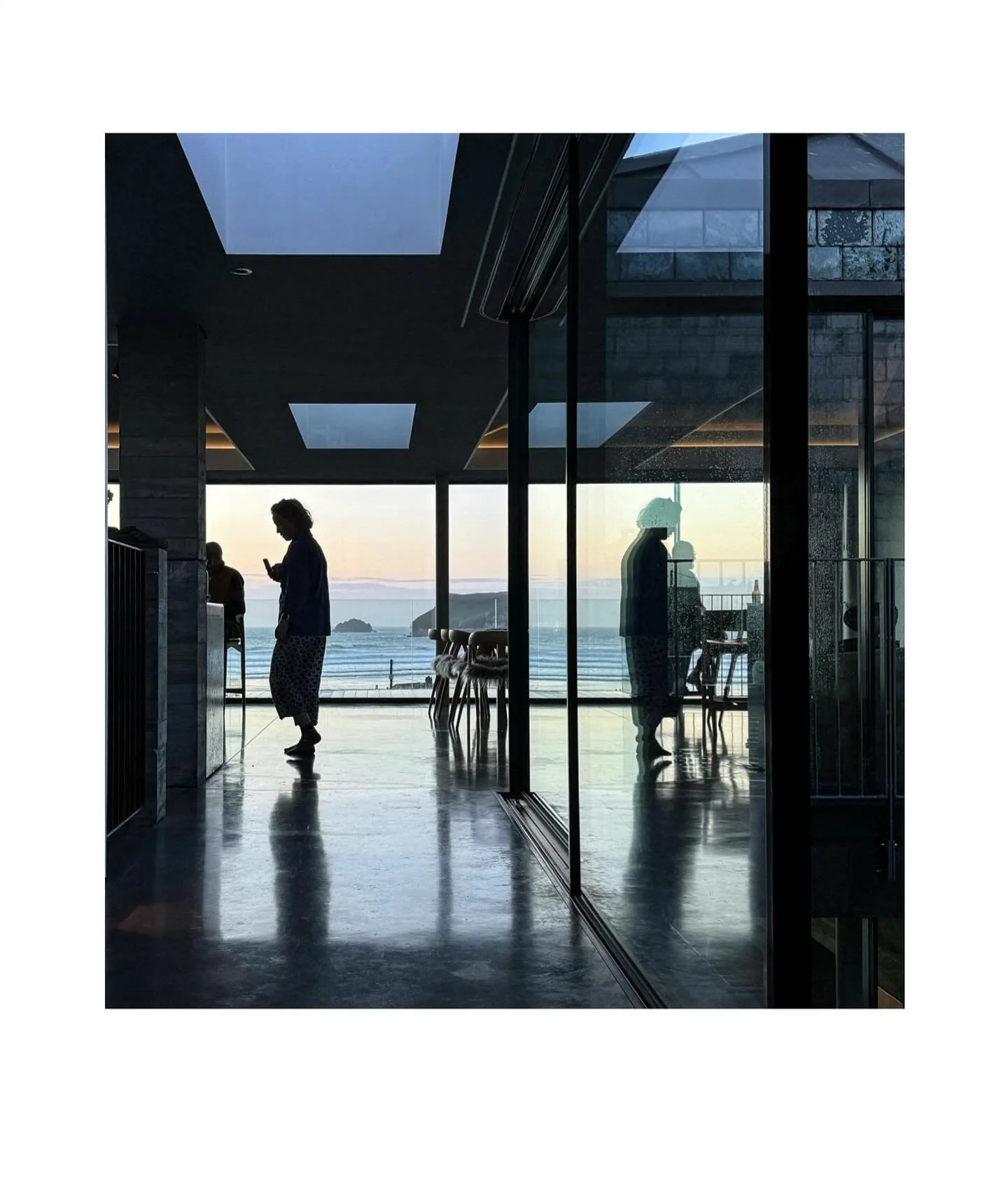
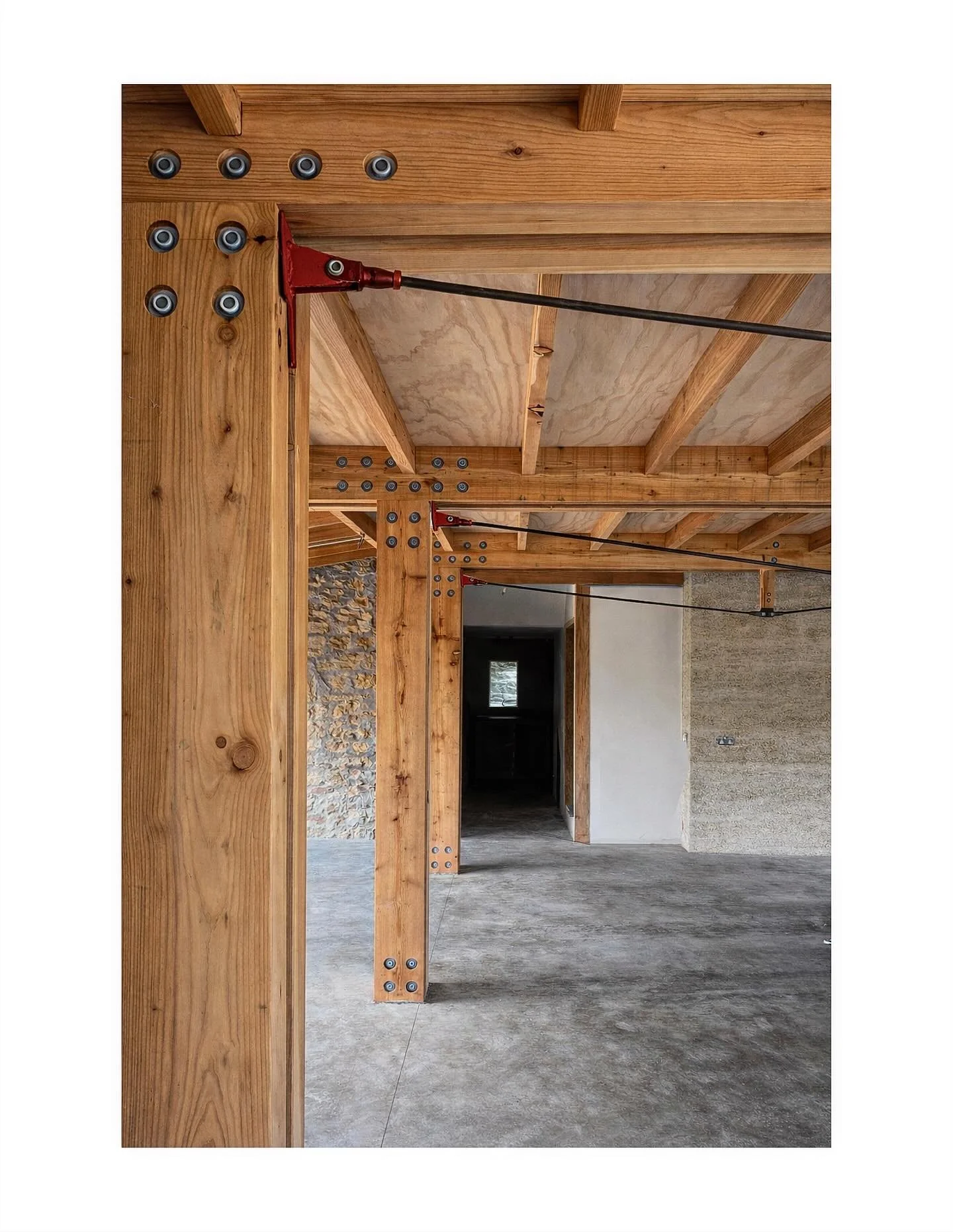
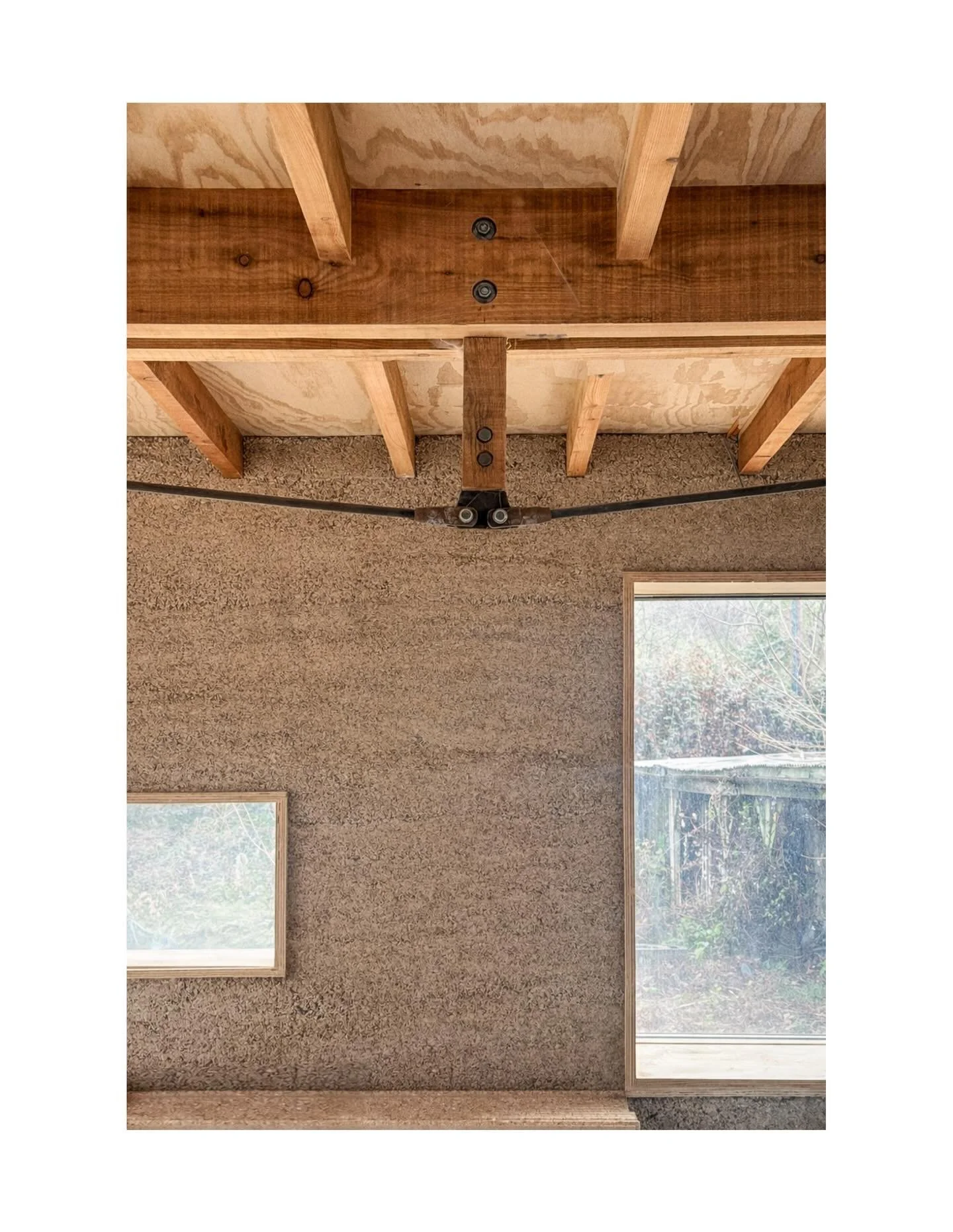
Anyway, here are two buildings of ours with material qualities, and no materiality. Both with materials that have emerged from the circumstances of their production - with, in the second image - no ‘finishing’, no sanitising and no curation.
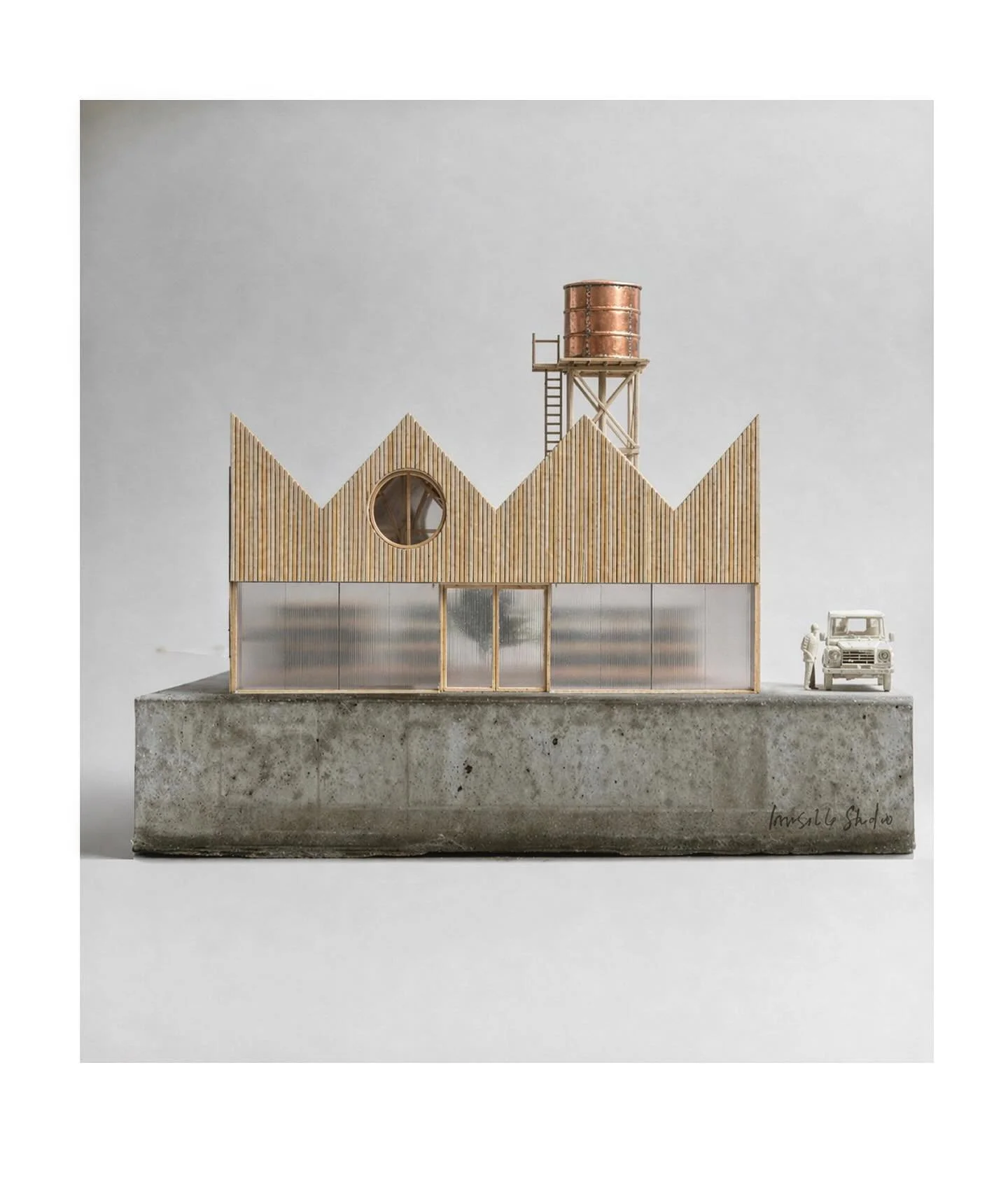
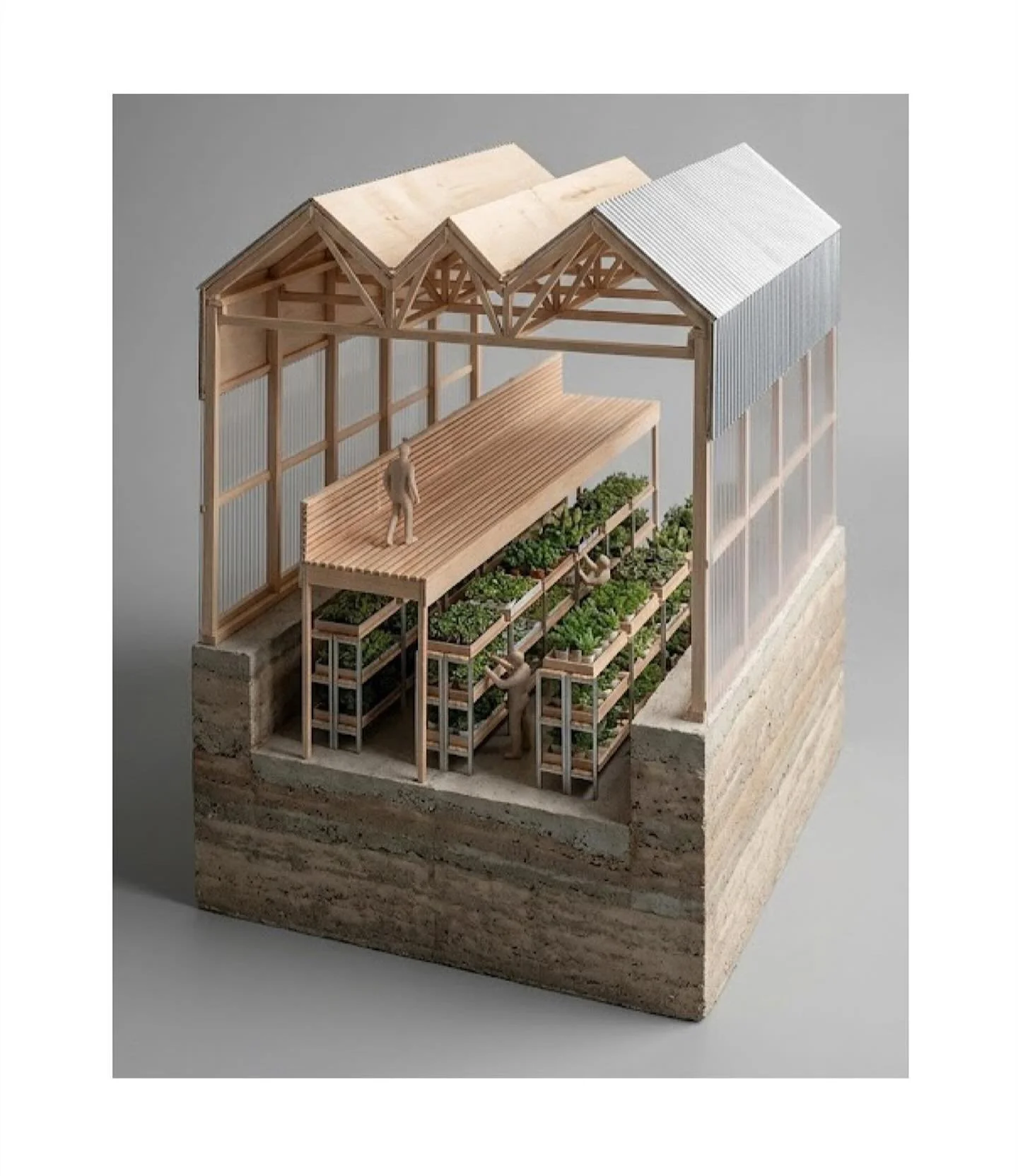
Sketch model testing for a new educational productive growing facility #WIP
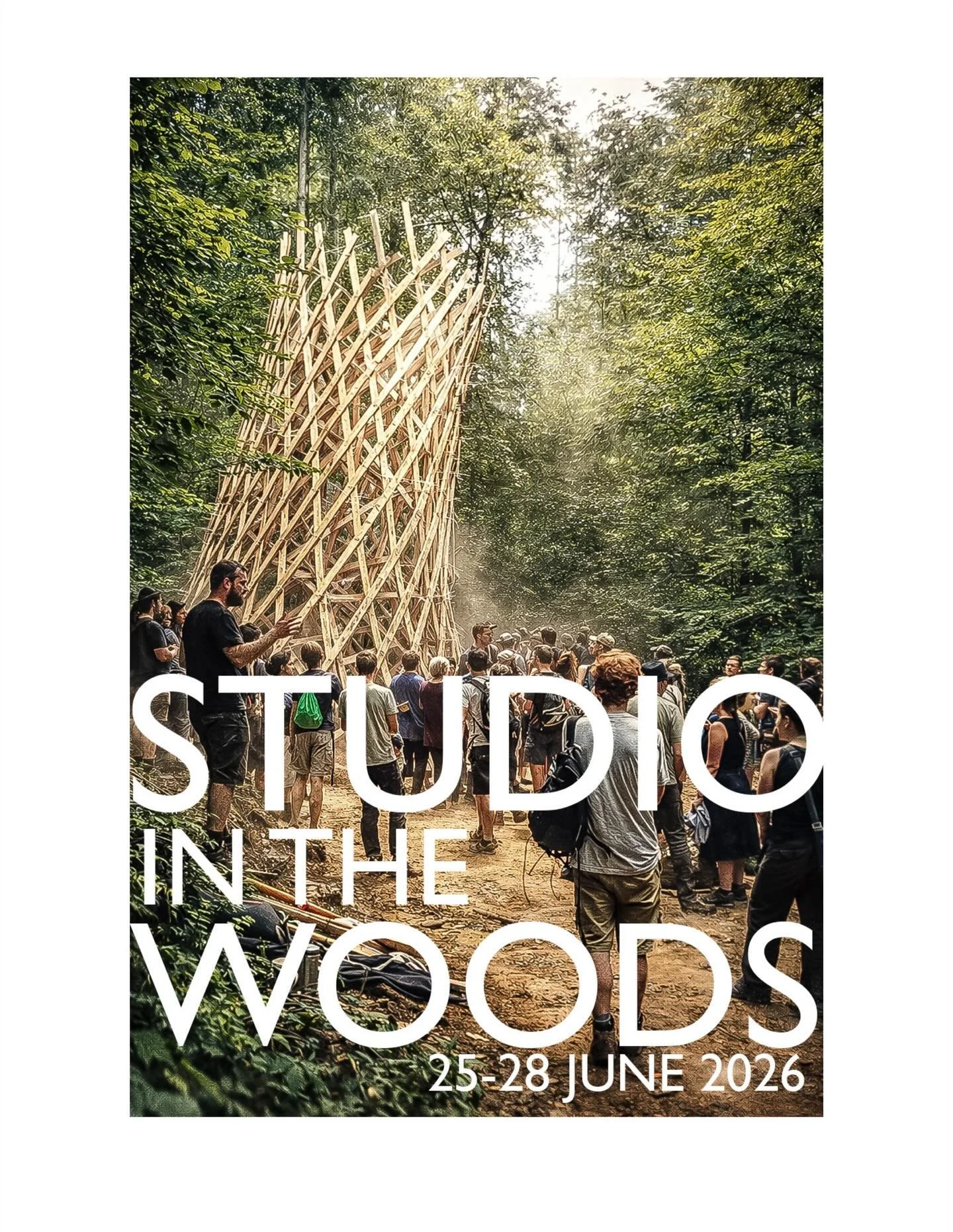
Hold the date: Studio in the Woods is confirmed for 2026, in perhaps the best and most appropriate location yet. More details soon.
One way. And the other. Hemp, Larch, Waxed Mild Steel, Shuttering Ply, Fibre Cement.